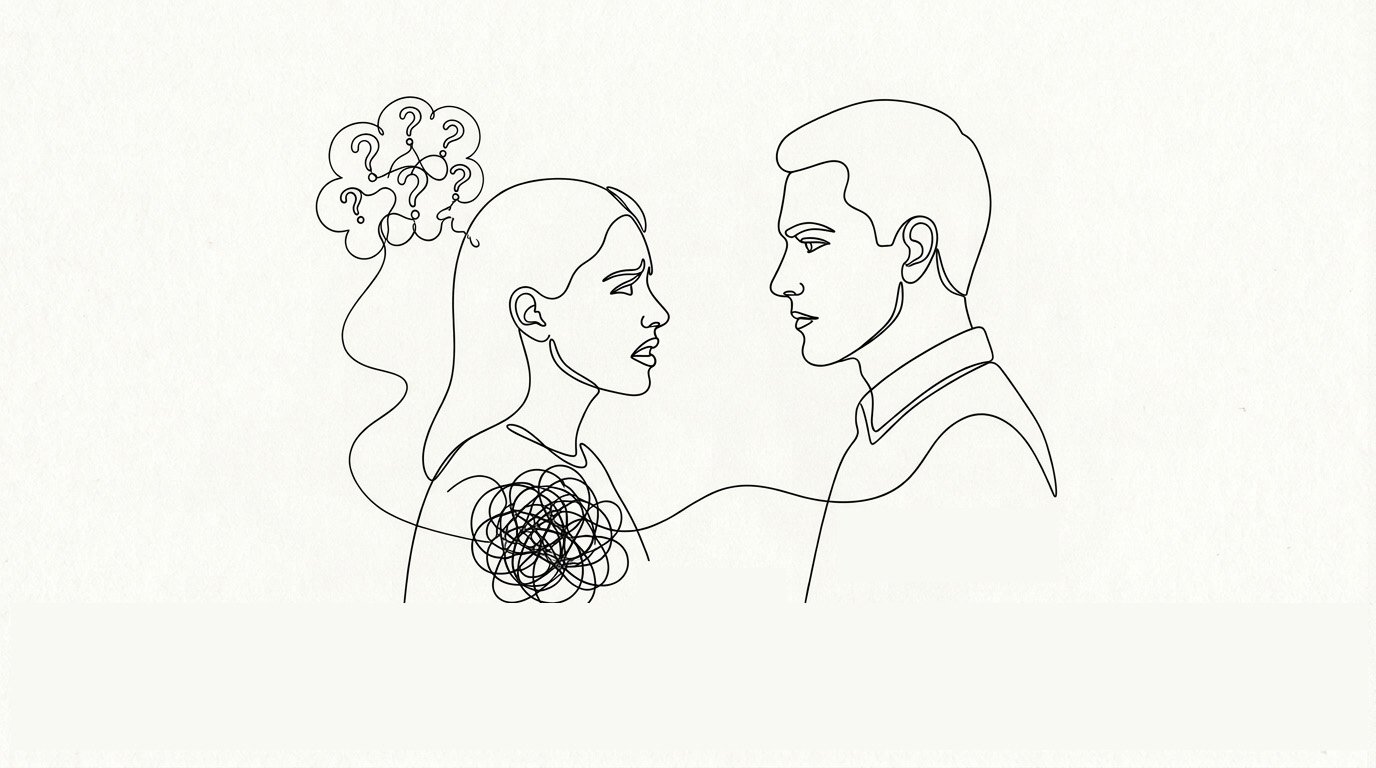
One of the most painful questions people ask themselves after leaving an abusive relationship is this:
“Why didn’t I see it?”
“Why didn’t I know?”
“How did I let that happen?”
And underneath those questions is often shame.
But here is the truth: most people don’t realise they’re being abused while they’re in it. Not because they are weak. Not because they are naïve. But because abuse is rarely obvious at the beginning.
Abuse does not usually start with cruelty. It often starts with connection.
It can begin with intensity.
With attention.
With feeling seen.
With someone saying, “I’ve never felt like this before.”
That intensity can feel like love.
Over time, small things begin to shift. A comment about what you’re wearing. A joke that doesn’t quite feel like a joke. A subtle criticism framed as “helping you improve.” A moment where your feelings are dismissed. A boundary that gets pushed.
But it’s gradual.
And gradual change is hard to detect.
Abuse Is Often Incremental
If someone shouted at you on the first date, you’d likely leave.
If someone insulted you publicly on day one, you’d likely walk away.
But when disrespect arrives in teaspoons rather than buckets, it’s confusing.
You adapt.
You justify.
You minimise.
You tell yourself:
- “They’re just stressed.”
- “They didn’t mean it.”
- “I’m being too sensitive.”
- “All couples argue.”
And because there are still good moments — laughter, intimacy, shared history — your nervous system clings to those as proof that everything is fine.
This is not stupidity.
This is attachment.
Gaslighting Changes Your Reality
Over time, something more subtle can happen: you begin to doubt your own perception.
You might hear:
- “That never happened.”
- “You’re imagining things.”
- “You’re too emotional.”
- “You always twist things.”
- “You’re the abusive one.”
This is gaslighting.
And gaslighting doesn’t just make you confused about events — it makes you question your own mind.
If someone consistently tells you that your memory is wrong, your feelings are exaggerated, or your reactions are unstable, your confidence in yourself slowly erodes.
Eventually, you stop asking:
“Why are they doing this?”
And you start asking:
“What’s wrong with me?”
That shift is powerful.
And deeply destabilising.
Trauma Responses Keep You Stuck
When you’re under chronic stress, your nervous system adapts.
You might:
- Fawn (people-please to avoid conflict)
- Freeze (shut down emotionally)
- Fight (become reactive)
- Flee (emotionally withdraw)
- Flop (collapse into exhaustion, depression, numbness)
These are survival responses.
If you find yourself apologising constantly, trying to keep the peace, walking on eggshells, over-explaining, overthinking — that isn’t weakness.
That is your nervous system trying to keep you safe.
When survival becomes the focus, awareness often narrows. You are not analysing whether something is abusive — you are trying to get through the day without conflict.
Cultural and Social Conditioning
Many of us were taught:
- Relationships take hard work.
- Loyalty matters above all.
- Don’t give up too easily.
- Be patient.
- Forgive.
- Keep families together.
- Don’t air your private business.
These values can be beautiful.
But in an abusive dynamic, they can keep someone trapped.
Especially if you were raised in an environment where:
- Conflict was normal.
- Emotional invalidation was common.
- Boundaries were discouraged.
- Love was conditional.
If something feels familiar, it often feels safe — even when it isn’t healthy.
Abuse Doesn’t Always Look Like Bruises
Not all abuse is physical.
It can look like:
- Silent treatment.
- Financial control.
- Withholding affection.
- Monitoring your movements.
- Undermining you in front of others.
- Breaking agreements and denying it.
- Turning children against you.
- Making you feel unstable.
Coercive control is about power, not violence.
And because there may be no visible injury, it’s easier to dismiss.
You may even think:
“At least they don’t hit me.”
But psychological harm cuts deeply.
The Brain Bonds to Intermittent Kindness
One of the most powerful reasons people don’t see abuse clearly is something called intermittent reinforcement.
If someone is cruel all the time, you can label it.
But if they are:
- Loving on Monday
- Cold on Tuesday
- Apologetic on Wednesday
- Distant on Thursday
- Passionate on Friday
- Your nervous system becomes hooked on the relief.
The apology feels intoxicating.
The good days feel like proof that the relationship can be saved.
You start chasing the version of them from the beginning.
And that hope can keep someone in place for years.
You Were Surviving, Not Evaluating
When people look back, they often judge themselves harshly.
But hindsight is clarity that survival mode doesn’t allow.
You were adapting.
You were coping.
You were trying.
You were loving.
You were hoping.
You were not conducting a psychological assessment of the relationship.
You were living inside it.
And it is very hard to see the full picture when you are standing in the frame.
Realising Later Is Not Failure
Often awareness comes slowly.
A comment from a friend.
A therapist naming something.
A child noticing something.
Reading an article.
Hearing someone else’s story.
And suddenly something clicks.
That realisation can bring grief, anger, shame, even disbelief.
But recognising it later is not a failure.
It is growth.
It is your nervous system finally feeling safe enough to see.
There Is Nothing “Wrong” With You
If you’re asking, “Why didn’t I know?”, it likely means you are beginning to trust your perception again.
That matters.
Abuse thrives in silence and confusion.
Clarity is the beginning of reclaiming yourself.
If this resonates, you are not alone.
And you are not foolish.
You were human.